Product Categories:
Product Tags:
Send us a message
Product Categories:
Send us a message
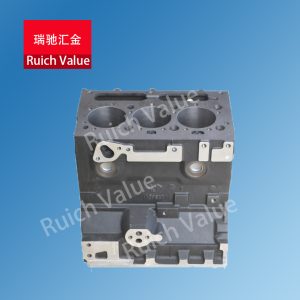
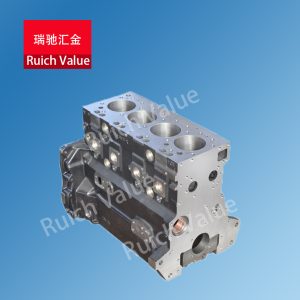
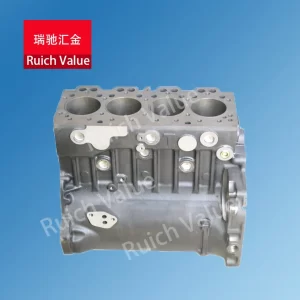
Our premium selection of replacement Perkins cylinder block assemblies delivers the rugged structural foundation and high load-bearing capacity required by heavy agricultural tractors and modern industrial generator systems. Backed by the innovative engineering and globally recognized durability standards of Perkins—known as the heart of every great machine—our products serve as reliable replacements to eliminate costly machinery downtime. This category covers the full family of Perkins engine block setups, including the 3.152, 4.41, 4.236, 4.248, and 1100 series, extending up to heavy-duty multi-cylinder configurations (1300, 1500, 1600, 2000, and 4000 series). Whether overhauling a Massey Ferguson MF240 tractor, rebuilding a mid-range Manitou forklift, or maintaining standby generators, our cast iron blocks preserve exact factory specifications.
Under demanding agricultural operations or constant industrial usage, engine block casting units frequently suffer from structural cylinder block cracking, which originates from severe thermal stress, cooling system failures, or inadequate anti-freeze protection. Abrasive fuel soot can also accelerate cylinder block bore wear, causing cylinder ovality, high blow-by, and severe oil consumption. Additionally, persistent coolant passage corrosion can thin the block walls, triggering catastrophic cavitation leaks. To resolve these field issues, our wholesale Perkins cylinder block range is manufactured from high-strength grey cast iron alloyed with copper and chromium. This specific material chemistry ensures exceptional thermal conductivity, absorbs high combustion pressures, and maintains high deck flatness to prevent gasket blowouts.
| Parameter | Value |
|---|---|
| Material | High-strength alloy cast iron (HB 187-241 Brinell) |
| Structural Configuration | Deep-skirt design extending below the crankshaft centerline |
| Engine Series Compatibility | 3.152, 4.41, 4.236, 4.248, 1104, 1204, 2000, 4000 |
| Dry Liner Parent Bore (3.152) | 91.44 mm (3.602 in) parent diameter |
| Dry Liner Parent Bore (4.236) | 98.43 mm (3.875 in) parent diameter |
| Dry Liner Parent Bore (4.41) | 101.00 mm (3.976 in) parent diameter |
| Quality Testing | 100% helium pressure tested & Magnaflux crack checked |
| Cylinder Block Cross Reference | Direct structural cross reference to OEM build configurations |


Our manufacturing facilities support a complete range of low-wear Perkins valvetrain and engine blocks. Explore our whole Perkins Categories to view associated cylinder heads, pistons, ring sets, oil pumps, and complete overhaul kits.
| Engine Model | Primary Part Number | Cross Ref Part Numbers | Compatible Machine Model |
|---|---|---|---|
| AD3.152 | ZZ90082 | 31358345, U5MK0067 | Massey Ferguson MF240 |
| AD3.152 | ZZ90082 | 31358345 | Massey Ferguson MF135 |
| 4.236 | ZZ50223 | 31358345, 4236 | Massey Ferguson MF165 |
| 4.248 | ZZ50266 | U5MK0266, 4248 | Massey Ferguson MF290 |
| 1004-4 | ZZ50315 | U5MK0653, 1004 | JCB 3CX Backhoe |
| T3.1524 Turbo | ZZ90153 | T31524 | Massey Ferguson MF260 |
| 4.41 | ZZ51187 | 441 | Massey Ferguson MF390 |
These premium cast iron engine blocks are engineered to restore compression and structural integrity across various heavy agricultural, industrial, and generator machines:
| Make | Machine Model | Year Range | Engine Model | Application |
|---|---|---|---|---|
| Massey Ferguson | MF135, MF240 | 1965–2005 | 3.152 Cylinder Block Series | MF240 Cylinder Block Utility Tractor |
| Massey Ferguson | MF165, MF290, MF390 | 1968–1999 | 4.236 Cylinder Block Series | Heavy Agricultural Tractor |
| JCB | 3CX Backhoe Loader | 1991–2004 | Perkins 4.41 Block (4.41) | Construction Backhoe Excavator |
| FG Wilson | P100, P150 Generators | 1995–2018 | 1104 / 1106 / 1306 Series | Industrial Standby Power Genset |
| Manitou | Rough-Terrain Forklifts | 1982–2008 | 4.236 / 4.248 | Heavy Material Handling |
As an experienced manufacturing partner and alternative to a regional UK Perkins parts supplier, we provide premium-grade block castings built directly from our ISO-certified production lines:
Cylinder block cracking in Perkins 3.152 engines is typically caused by extreme thermal stress or freezing temperatures. If an engine is run under heavy load with low coolant levels, localized hot spots form, leading to thermal expansion and stress-induced cracking between cylinders or near the head bolt threads. Additionally, failing to maintain correct anti-freeze concentrations in cold climates causes water inside the coolant passages to freeze, expand, and split the cast iron wall. Rebuilders diagnose these cracks through high-pressure water testing or Magnaflux magnetic particle inspection during overhaul.
Cylinder block bore wear and ovality in the Perkins 4.236 engine series typically manifest as excessive crankcase pressure (blow-by), increased blue exhaust smoke, and high oil consumption. As the piston rings travel up and down under combustion pressure, they wear the cylinder walls into an oval shape over time, primarily along the thrust axis. If bore ovality or taper measurements taken with a cylinder dial indicator exceed the maximum service limit of 0.15 mm (0.006 inches), the block must be bored out to fit oversized pistons or bored to receive fresh dry-type centrifugally cast cylinder liners.
In the cylinder block vs cylinder head comparison, the components have distinct roles and metallurgy. The cylinder block houses the pistons, crankshaft, and cylinders; it serves as the rigid structural core of the engine and requires high-strength cast iron to withstand severe mechanical twisting forces. The cylinder head sits on top, sealing the combustion chambers and housing the valves. It experiences severe thermal cycles and requires exceptional resistance to thermal shock. While the block must resist physical distortion, the head must facilitate fast heat transfer, often utilizing specialized alloyed grey iron or aluminum.
Comprehensive cylinder block machining during an overhaul requires several precise operations. First, check the top deck flatness using a straight edge and feeler gauges; resurface the deck if warpage exceeds 0.05 mm to prevent head gasket blowout. Next, perform line boring on the main bearing parent bores to guarantee perfect crankshaft alignment and prevent bearing wear. Finally, hone the cylinder bores to create a correct cross-hatch hone angle (typically 30 to 45 degrees), which is essential for proper oil film retention and rapid piston ring seating.
📱 WhatsApp: +86 13889277673 📧 Email: [email protected]
⚡ Fast response | Factory direct | Global shipping | ISO 9001 Certified
For Any Inquiries, please feel free to contact us, Our sales teams are always glad to support your business